

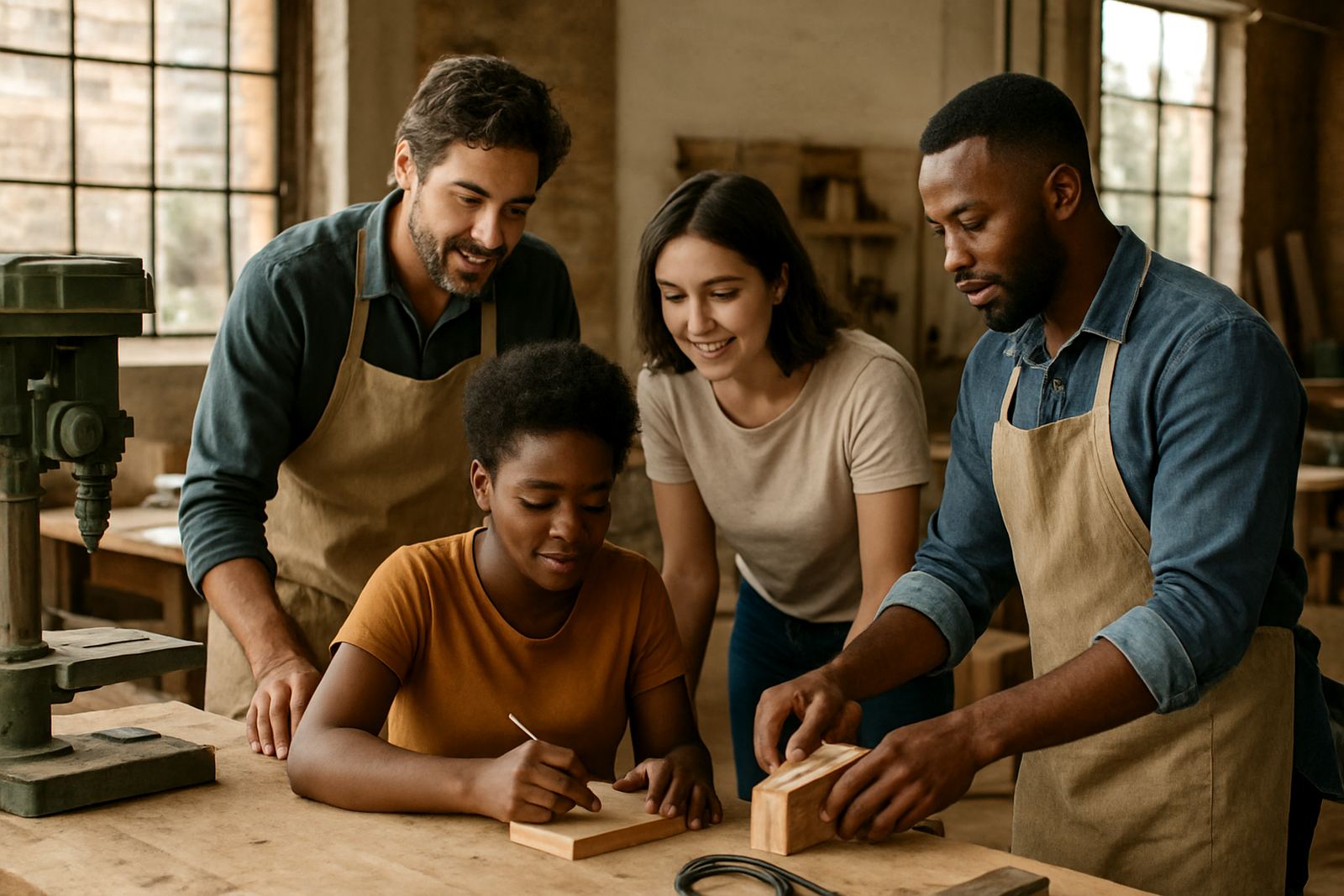
Built from a need we kept seeing in local workshops
SA Makers started in 2012 with a simple idea: people should not have to figure out every part of making on their own. In Johannesburg, and in towns and cities across the country, we kept meeting learners, teachers, hobbyists and small teams who had the energy to build but were short on the right tools, safe space, or guidance on where to begin. So we set up a service that brings those parts together in one place.
From our Braamfontein base, we work with partner makerspaces and training venues nationwide, including Sandton, Midrand, Pretoria East, Soweto, Durban, Cape Town and Gqeberha. That network matters because a person in one area may need a short course, while a school or startup in another may need help with layout, storage or a starter kit that can handle daily use. We try to meet people where they are, not where it is easiest for us.
Our work has grown through word of mouth, repeat clients and practical results. We have seen classrooms turned into active lab spaces, empty corners become tool zones and teams move from rough ideas to testable prototypes. The job is not to sound clever, it is to make the next step clear.
How we work on the ground, not just on paper
We begin with a proper look at what is already there. That can mean a quick maker audit, a site visit, or a chat through the enquiry form with the person who manages the room, the budget or the learners. We ask about access, power points, ventilation, storage, after-hours security and whether the space must cope with load-shedding, damp conditions or heavy daily use. Small details save time later.
Once we understand the setting, we shape the work around it. For some clients that means space planning and tool zone layouts. For others it means startup space kits, maintenance checks, member onboarding or facilitator support. A school may need a full school lab refresh, while a community group may only need safety signage setup and consumables planning. We keep the scope practical and the steps easy to follow.
- We plan for real use, not ideal conditions.
- We account for South African power cuts, storage limits and high traffic.
- We choose layouts that are easy to keep tidy and safe.
- We keep the setup flexible enough for groups, training or solo work.
That approach helps us avoid unnecessary cost and keeps the space useful long after the first day. It also means the person running the space is not left guessing what comes next. If a venue in Durban needs extra protection against coastal humidity, or a room in Pretoria East needs clear walkways and better shelving, we work with that in mind.
The values that guide our team
Our team is small enough to stay close to the work and broad enough to cover the main parts of a maker operation. Naledi Dube leads the business, with Naledi Khumalo on training, Johan van Zyl on workshop operations, Ayanda Ndlovu on community partnerships, Megan Petersen on starter kits, Thabo Molefe on technical support and Reuben Naidoo on the makerspace network. Each role matters because a good service needs more than one point of view.
The values behind the work are simple. We favour safety, clarity and follow-through. We respect budgets, time and the fact that many clients are juggling school terms, volunteer schedules or opening dates. We also believe in proper support. If someone joins a training session or receives a starter kit, they should know what the parts do, how to keep them in good condition and what to do when something needs attention.
- Practical support over fancy promises.
- Safe work habits from day one.
- Respect for local conditions and different levels of experience.
- Reliable communication through the enquiry form and agreed project steps.
We do not treat beginner users as a side market. New makers, teachers and coordinators are often the people who need the clearest guidance. That is where we put care into the process.
Training that gives people confidence to get started
Our training programmes are built for people who want to learn by doing. We cover workshop basics, safe tool use, space routines, storage habits and how to prepare for projects with a group or class. The aim is not to overload learners with theory. It is to help them understand the room, the tools and the sequence of work so they can make steady progress.
Training can be arranged for individual users, educators, facilitators or teams opening a new space. Some groups need a short induction before a launch. Others need ongoing support over several sessions. We also help with member onboarding so that a new user understands site rules, check-in steps and how to use shared equipment without causing delays for everyone else.
In many cases, the best training is linked to the actual space. A room in Braamfontein may need a different setup from a school lab in Soweto or a shared venue in Cape Town. We take that seriously because a real workshop must work in that room, with those people, on that budget. If a cable runs across the floor or the storage is too high, it becomes a problem very quickly, especially when the room is busy.
Starter kits and space setups that make sense in South Africa
We supply starter kits for new projects and new spaces, along with the planning that goes with them. That can include starter space kits, consumables planning, event maker stations and storage solutions designed for repeated use. We source with local conditions in mind, from heat and dust to transport damage and power interruptions.
The best kit is the one that is ready on arrival and easy to maintain. We think about what is used daily, what runs out first and what needs a secure home after hours. For schools and community spaces, that can mean labelled storage, clear safety signage and a simple maintenance plan. For startup teams, it might mean a compact layout with enough flexibility for testing, packing away and resetting between sessions.
- Starter space kits for new makerspaces and training rooms.
- Tool zone layouts that separate active work from storage.
- Safety signage setup for shared spaces and public access areas.
- Consumables planning so supplies do not run out mid-project.
- Maintenance checks that help equipment last longer.
We also support spaces that host events, demo days and school groups. When there are lots of people moving through a room, the layout has to be simple and the signs have to be visible. A good setup reduces confusion and keeps the focus on the making.
Why our network matters across cities and towns
South Africa does not work like one single market, and maker support should not either. A team in Sandton may need fast turnaround and a compact training room, while a school in Midrand may want to refresh a lab before the new term. A community venue in Durban may need help with moisture and storage, and a group in Gqeberha may want a layout that suits mixed-use sessions. We use our network to match the work to the place.
Our makerspace directory helps people find a venue that suits their project, their location and the kind of support they need. That is useful for individuals looking for a place to start, and for organisations trying to connect with partner spaces across the country. We want it to be easier to get from idea to action, without wasting weeks hunting for the right room.
We are based in Braamfontein, but our work is not limited to one post code. We stay close to the people using the spaces, and we keep learning from each region because each one has its own pace, its own constraints and its own strengths. That is part of how we keep the service grounded and useful.