Start With the Risks in Your Own Workshop
Before you buy anything, look at what you actually do in the space. A woodcutting corner needs dust control and eye protection, while a soldering bench needs heat protection and good airflow. If you are working with drills, grinders, adhesives or paint, the risks change again. The easiest way to choose PPE is to match it to the task, not to buy a pile of gear and hope for the best.
In Johannesburg and surrounding areas, many beginners share space, so your PPE also needs to work when tools are moved around, benches are close together and storage is limited. If your venue has municipal fire rules or site safety rules, check them before setting up. Some spaces require closed shoes at all times, some want hair tied back, and some need extra signage near hot work or spraying areas.
- List your main tasks, for example cutting, sanding, drilling, soldering or painting.
- Note the hazards, such as dust, flying chips, heat, splashes or noise.
- Match each hazard to one item of PPE, not three or four extras you wont use.
- Check whether your makerspace has its own safety requirements before your first session.
The Core Kit Every Beginner Should Have
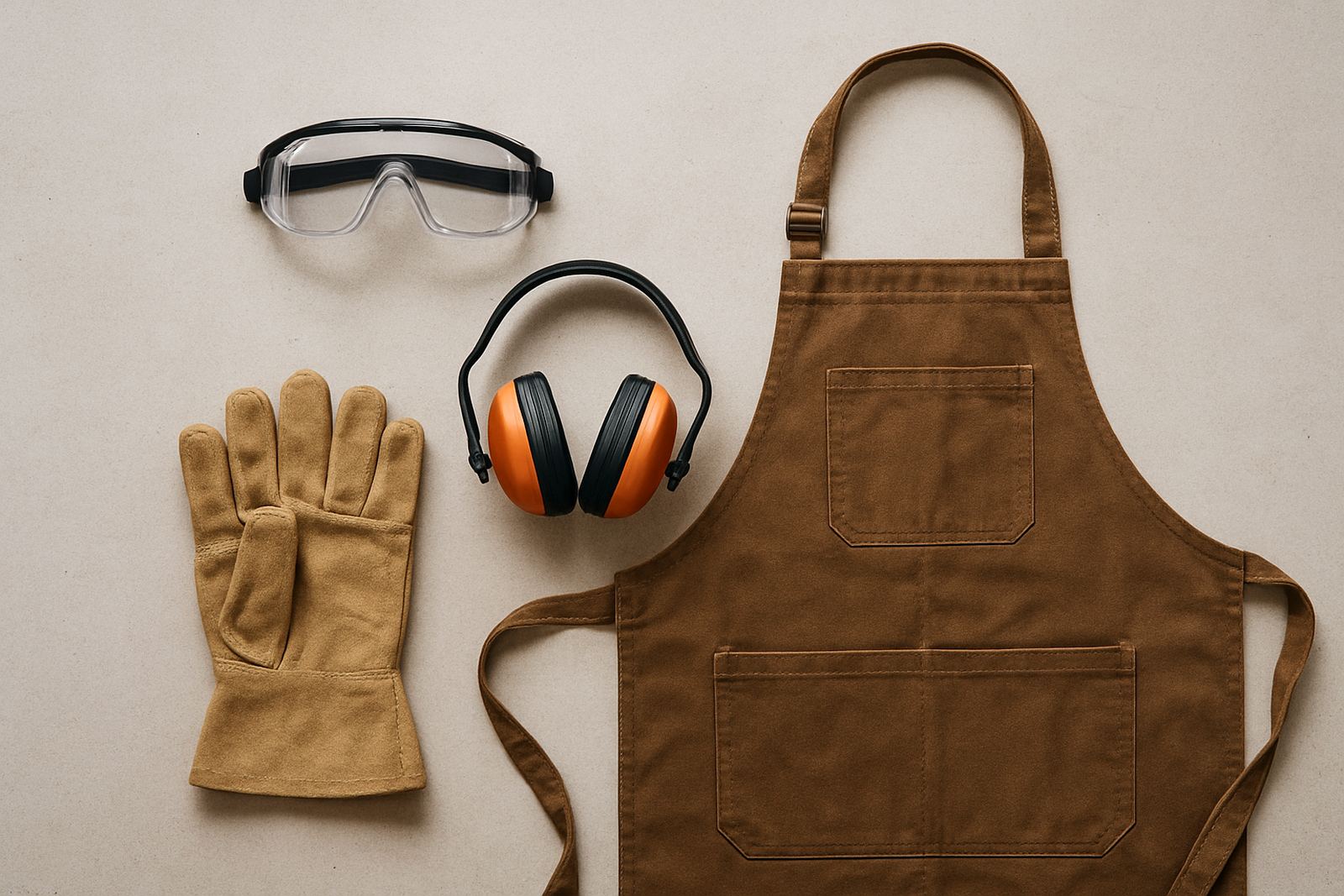
For most starter workshops, a small set of PPE covers the basics well. You do not need complicated gear to begin, but you do need gear that fits properly and is kept in good condition. The first items to buy are eye protection, hand protection, closed shoes, hearing protection and a dust mask or respirator for dusty tasks.
Good PPE should feel practical enough that you will wear it every time. If goggles fog up badly, if gloves are too loose, or if your shoes make it hard to move safely around a bench, you are less likely to use them. That is where a starter kit helps, because it gives beginners the right size and type of items for common workshop work.
- Safety glasses or goggles for drilling, cutting, grinding and sanding.
- Work gloves for handling rough timber, sheet material, scrap metal and sharp edges.
- Closed leather or heavy duty shoes, ideally with solid soles and covered toes.
- Ear defenders or earplugs for noisy machinery and long sessions.
- Dust mask or particulate respirator for sanding, sweeping and material prep.
How to Choose Eye and Face Protection That Actually Works
Eye injuries happen fast. A tiny chip from a drill bit, a puff of dust from sanding, or a splash from glue can cause real damage. For most beginners, safety glasses with side protection are the starting point. If you are working with grinding, cutting discs or overhead splash risks, a full face shield may be needed over the glasses.
Choose lenses that suit the workshop light you have. In bright spaces or near open doors, clear lenses often work best. In rooms with mixed lighting or reflective surfaces, anti-fog options help keep vision clear. If load-shedding means your workspace changes from bright to dim quickly, keep the lenses clean and have a spare pair nearby.
Do a quick fit check before every session. Glasses should sit comfortably, not slide down your nose, and should cover the sides of your face well. If they pinch or leave marks after ten minutes, they are probably the wrong size.
Hands, Feet and Clothing for Day-to-Day Work
Hands take the most knocks in a basic workshop, so gloves matter. Use close-fitting work gloves for handling timber, moving scrap and carrying rough stock. Do not wear loose gloves near rotating tools, because fabric can catch and pull your hand in. For fine assembly, painting or electronics, you may need bare hands for better control, but then keep cuts and hot surfaces in mind.
Feet need just as much attention. Open sandals, soft sneakers and worn soles are a poor choice for most maker spaces. Closed, sturdy shoes protect against dropped tools, sharp offcuts and spills. In coastal areas like Durban or Gqeberha, humidity can make floors slick and metal parts damp, so soles with decent grip help. At a minimum, wear long trousers and fitted clothing that will not snag on machine parts.
- Choose gloves that fit snugly, with good grip and no loose fingertips.
- Keep cuffs tight or rolled away from moving tools.
- Wear long pants made from durable fabric, not thin loose material.
- Keep shoes dry and free from oil, glue and dust buildup.
- If your work involves sparks or hot debris, avoid synthetic fabrics that melt easily.
Breathing Protection for Dust, Fumes and Paint
Many beginners underestimate breathing hazards. Sanding MDF, sweeping dusty floors, mixing powders and spraying finishes all create fine particles that stay in the air. Some tasks also release fumes that you can smell before you can see them. A simple dust mask is useful for light dust, but it is not the same as a fitted respirator for finer particles or chemical vapours.
In a shared venue, ventilation matters as much as the mask itself. Open doors, extractor fans and scheduled cleanups make a big difference. If you are working during power cuts, plan for what happens when fans stop. Stop spray work if the air is not moving properly, and keep solvent lids closed. A mask should be stored in a clean bag or box, not left on a dusty bench where it picks up dirt and smells.
Replace disposable masks when they become damp, dirty or hard to breathe through. Reusable respirators need clean filters and a good face seal. If you have facial hair, the seal may be weaker, so check carefully before using one for fine dust or fumes.
Set Up a Simple PPE Routine Before Every Session
The best PPE is the kit you remember to use. Make it part of your opening routine so nothing gets forgotten when the session starts. In training sessions across Johannesburg, Pretoria East, Midrand and Soweto, a short pre-start check saves time later and helps new makers build good habits. Keep your PPE together in one box, bag or shelf space near the entrance to the workshop, so it is easy to grab before touching any tools.
Use the same quick sequence each time: check the task, pick the right gear, inspect it for damage, then put it on before switching on any tools. If something looks cracked, torn, stretched or dirty, do not use it. It is easier to replace one item now than deal with an eye injury, burned skin or a cut hand after the fact.
- Inspect lenses for scratches, cracks and loose arms.
- Check gloves for holes, split seams and worn palms.
- Look at shoes for exposed toes, thin soles or poor grip.
- Test masks and respirators for fit before starting work.
- Store clean PPE away from dust, water and direct sun.
Common Beginner Mistakes and How to Avoid Them
One common mistake is buying gear only after something goes wrong. Another is choosing the cheapest item without checking if it fits the job. A third is leaving PPE in the car, where heat and sun can damage elastic straps and plastic parts. In shared workshops, gear also gets mixed up easily, so label your items if you can.
Do not treat PPE as a last step. Put it on before you start and keep it on until the hazard has passed. That means eye protection before cutting, masks before sanding, and gloves only where they are safe to use. For beginners, the habit matters as much as the item itself. If you are unsure, ask the facilitator or workshop lead before you begin, rather than guessing halfway through the job. A few extra seconds at the start is better than a rushed trip to the clinic.
With a basic kit, a clear routine and a bit of discipline, workshop safety becomes part of the work instead of an extra chore.