What the Metalwork Beginners kit includes
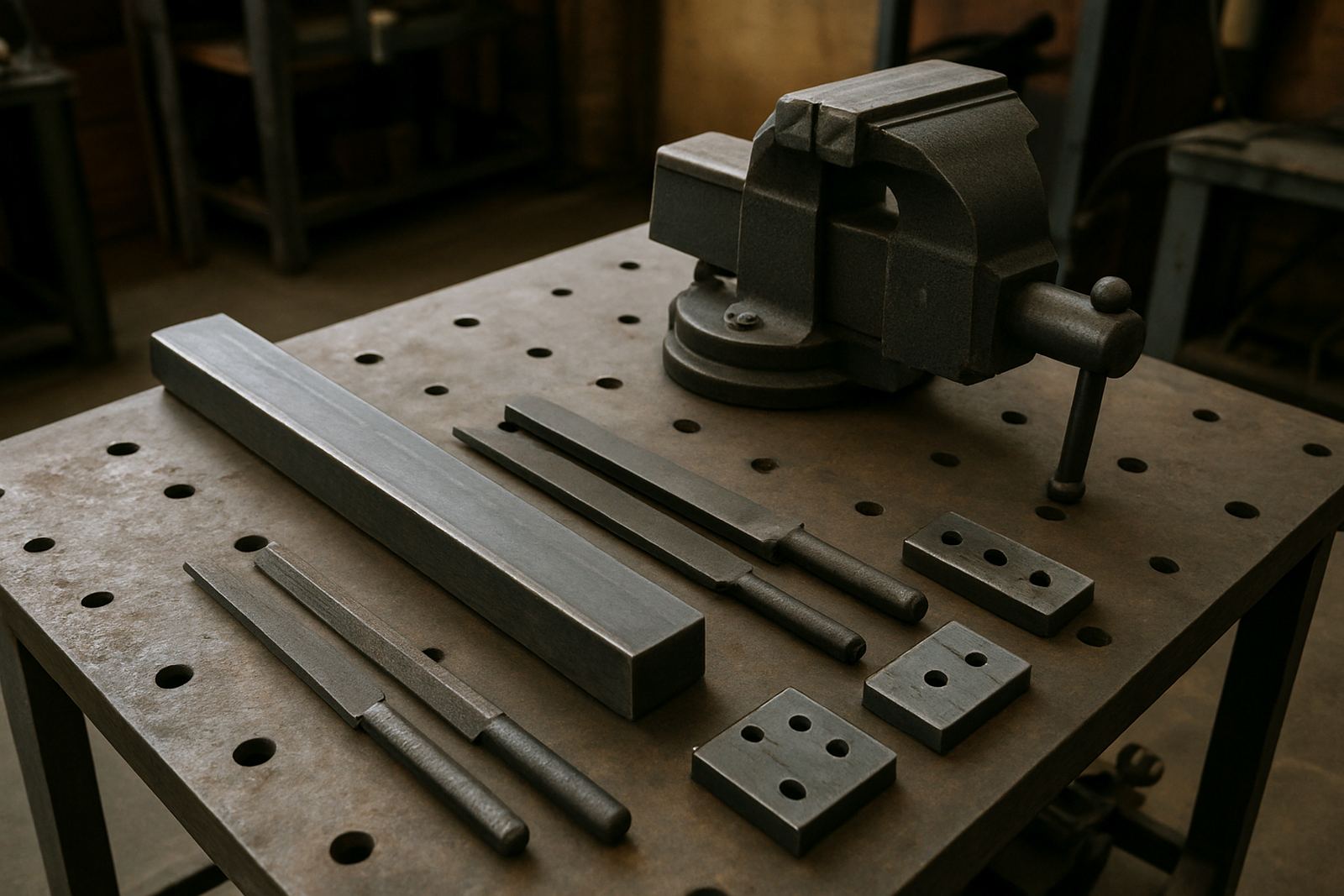
The Metalwork Beginners kit is a starter set for people learning the basics of working with mild steel, aluminium and other common workshop metals. It is set up for simple tasks such as marking out, trimming stock, drilling holes, fastening parts and doing light finishing. Typical kit contents include a steel rule, tape measure, scriber, centre punch, hacksaw frame, spare blades, hand drill or portable drill, drill bit set, files, clamps, deburring tool, square, safety glasses and gloves.
For most first projects you only need a flat work surface, a vice or clamping point, and enough space to move around safely. The kit suits maker spaces, school technology rooms, garage workshops and training venues where learners need a practical start without a full industrial setup. It is also a good fit where power is limited during load-shedding and hand tools still need to carry the job.
Sizes and options for different spaces
We supply the Metalwork Beginners range in a few practical options, depending on how many learners will use it and how much bench space you have. A solo starter pack suits one person or a home workshop. A two to four person training set works well for maker groups, school modules and shared benches. Larger venue packs are better for faciliators running regular classes in Braamfontein, Soweto, Midrand or Pretoria East, where tools need to move between sessions and stay organised.
Common working sizes covered by the kit are light sheet up to about 1.2 mm, round bar up to about 8 mm by hand cutting, and flat bar or angle for introductory work. The exact capacity depends on the tool set you choose and the metal grade being used, so it is worth matching the kit to the jobs you plan to teach. If your learners will mainly do brackets, nameplates, jigs or small frames, the basic range is usually enough.
- Solo starter pack for one learner
- Small group pack for 2 to 4 users
- Training room pack for ongoing classes
- School lab refresh pack for technology rooms
- Maker station pack for events and demos
Where this starter kit works best
This product suits first-time users who need to learn safe habits before moving into heavier fabrication. It is commonly used in youth programmes, school labs, community maker hubs, startup spaces and small repair projects. In coastal areas such as Durban and Gqeberha, it is also useful to teach correct storage and wiping down of metal tools after use, because humidity can affect blades, bits and exposed steel parts if they are left sitting wet.
For Johannesburg and Pretoria workshops, the kit works well where there is a shared tool wall or a small bench bay. It is handy for teams building exhibition pieces, prototype brackets, plant stands, storage frames and sample components. If you need a set for a venue with municipal safety rules or shared access hours, we can help plan the tool zone so learners do not crowd the same station at once. That saves time and keeps the room flowing properly.
- Schools and TVET support rooms
- Community maker spaces
- Startup workshops and shared garages
- Training venues and event maker stations
- Small team prototyping spaces
Power, gas and workshop setup
The beginner kit is designed to work with minimal infrastructure. Most tasks can be done with hand tools, while a cordless or mains drill handles hole making. If you use a bench grinder, angle cutting machine or soldering equipment alongside the kit, plan for safe power points, cable routing and breaker capacity. In areas where load-shedding is common, keep hand tools ready so learning can continue when electricity is off.
No gas is required for the standard starter kit. If your programme later expands into welding, bending with heat or brazing, then you will need separate gas cylinders, regulators, leak checks and proper storage. For now, the focus is on clean measurement, controlled cutting and simple joining methods such as bolts, rivets and screws. That makes the kit easier to manage in school rooms and multipurpose venues, and it reduces the storage burden too.
Space planning should allow for a bench depth of at least 600 mm, a clear walking lane behind the user and a dedicated place for scrap offcuts. Good lighting matters more than people think. A bright bench lamp and a white wall behind the station helps learners see marks and drill positions clearly, which cuts down on rework.
Care, servicing and safe storage
Metalwork tools last longer if they are cleaned after each session and stored in a dry cabinet or lockable tool chest. Wipe down blades, bits and metal rulers, then return small items to labelled trays so nothing goes missing between classes. In humid areas near the coast, a light protective oil on steel parts helps slow surface rust. Replace worn drill bits and cracked handles as soon as they show damage.
Routine servicing is straightforward and should be done on a set schedule. Check clamps, file handles, blade tension, drill chuck grip and PPE condition before the start of each class. If a tool has a damaged cord, bent shaft or loose guard, remove it from circulation straight away. A small maintenance log helps staff stay ahead of faults and keeps the station ready for the next group.
- Clean metal dust and swarf after use
- Store blades and bits in dry, labelled boxes
- Inspect PPE before each training session
- Replace worn consumables on a set cycle
- Log faults and repairs for each station
What to check before you place an order
Before ordering, think about the level of learner, the type of metal you will use and the number of stations you need. If your group is mainly beginners, avoid over-specifying tools that will sit unused. It is better to choose a practical set that covers measuring, marking, cutting, drilling and fastening first, then add specialist items later as skills grow.
Also check whether you need any extras for your venue such as vises, bench stops, PPE, storage trays or safety signage. If the kit is for a school or public maker space, it is worth confirming that each user will have clear access to eye protection and an organised return point for tools. That makes member onboarding simpler and keeps the space tidy. Ask for the finish, pack size and replacement consumable list upfront so there are no surprises after delivery.
- Number of learners or stations to be covered
- Metal thickness and project type
- Available bench space and storage
- Power access and backup plan during outages
- Any extra safety or signage needs
Key facts
| Product type | Beginner metalwork starter kit |
|---|---|
| Primary use | Measuring, cutting, drilling and joining simple metal parts |
| Typical group size | 1, 2 to 4, or training room packs |
| Material range | Mild steel, aluminium and light sheet work |
| Power needs | Optional mains or cordless drill; hand tools do the basics |
| Gas needs | None for standard kit |