What Packaging For Makers Covers
Packaging For Makers is a practical set of box, pouch, label and insert options for small-batch products, prototype runs, and workshop-made goods. It is meant for people selling at markets, supplying shops, sending parcels, or handing over items at a makerspace in Braamfontein, Pretoria East, Durban or Cape Town.
The aim is simple: keep the product safe, make it easy to stack and count, and present it well enough for local sales. That means packaging that handles vibration in delivery vans, dust in storage rooms, and the heat that builds up in couriers and market stalls. For fragile items, we usually add recycled-board inserts, inner wrap or corner supports so the product does not shift around.
- Suitable for handmade goods, tool kits, small electronics, stationery sets, soaps, candles and sample packs
- Designed for market tables, retail shelves, courier bags and school project bundles
- Can be supplied plain for labelling or pre-printed for repeat runs
Common Sizes and Packaging Options
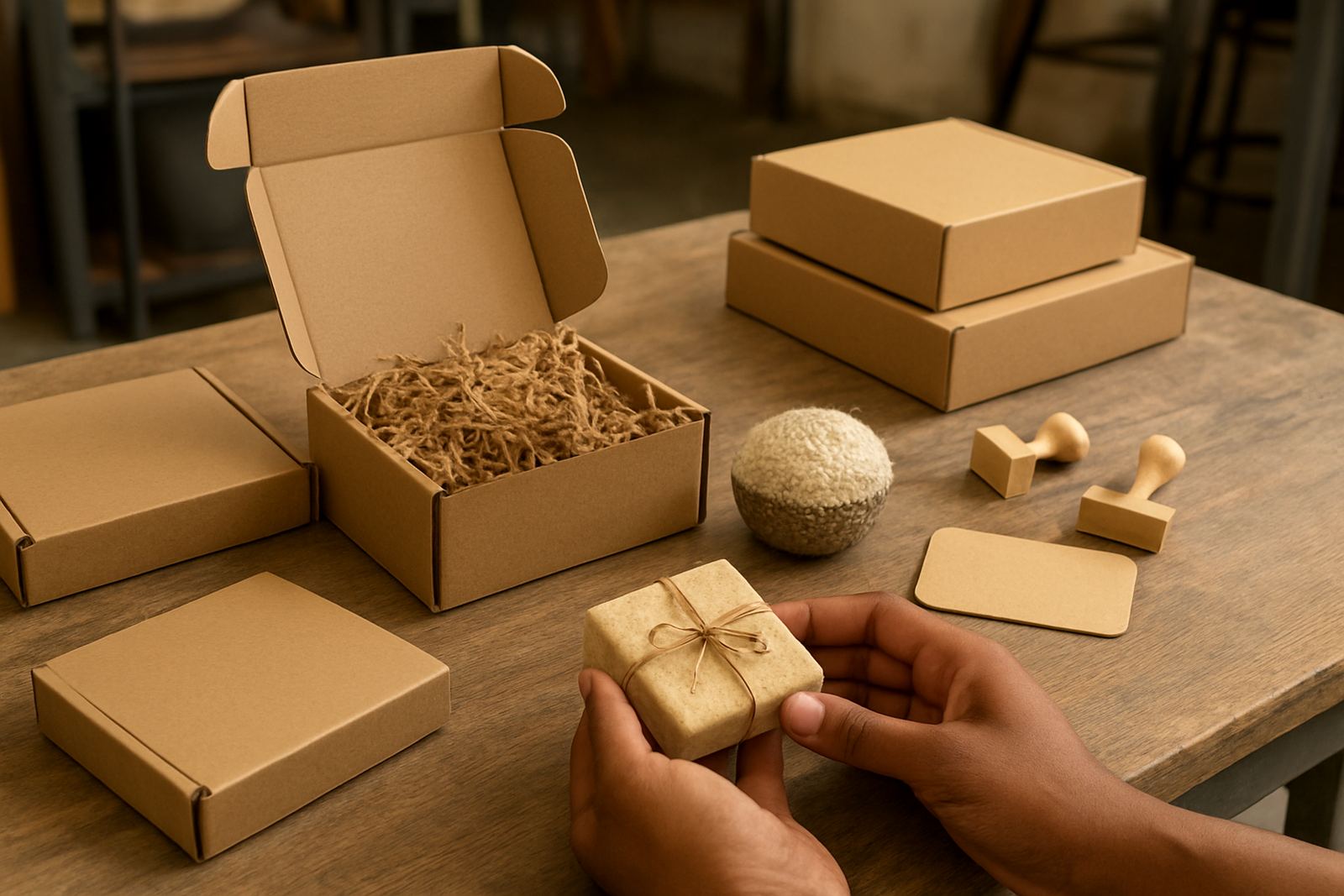
We set packaging around the product first, then the selling method. A snug fit reduces damage and cuts down on wasted fill material. For most makers, the useful range starts at small pouches and cartons and moves up to larger retail boxes, carry packs and mailing cartons. If you are packaging mixed items, we can split them into compartments so the contents do not rub against each other.
Standard options include flat cartons, tuck-end boxes, sleeve packs, kraft carry bags, bottle sleeves, partitioned inserts and tamper-evident seals. For heavier products or sets with metal parts, we normally suggest double-wall cartons or reinforced corners. If the product is sensitive to moisture, we can add liners or barrier wrap, especially for coastal areas where humidity can be high.
- Small cartons: 80 x 80 x 40 mm up to 120 x 120 x 80 mm
- Medium cartons: 150 x 100 x 50 mm up to 250 x 180 x 100 mm
- Mailing cartons: single-wall for light goods, double-wall for 2 kg to 10 kg parcels
- Labels: roll or sheet format, with space for batch number, barcode and care notes
Where It Suits Best
This packaging suits makerspaces, school labs, pop-up sellers, training groups, and small workshops that need a tidy system for product handover. It also works well for teams doing local sales at weekend markets, community fairs, church bazaars and corporate gift runs. If your goods are moving between the workshop and a customer in the same day, simple packaging is often better than fancy packaging that takes too long to assemble.
We find it works especially well for first-time sellers who need a low-cost way to look organised from day one. It is also useful for training venues in Soweto, Midrand and Sandton where learners need to pack a finished item, label it, and take it home safely. For schools and youth programmes, the packaging can carry instructions and a parts list so nothing goes missing.
- Best for low to medium production runs
- Works for local collection, courier delivery and market display
- Useful for workshop kits, school packs and fundraiser products
Setup, Filling, and Power Requirements
Most Packaging For Makers setups are manual or semi-manual, so there is little power demand. That makes it ideal when load-shedding is affecting a workshop or training venue. Basic packing can be done with a table, cutting mat, tape dispenser, label printer and hand tools. If you are using heat-seal bags, a small heat sealer is helpful and can run from standard mains power. For any powered setup, check the plug load before adding more equipment onto the same circuit.
Gas is normally not needed unless you are sealing or shrinking film in a specialised process, and even then the space must be well ventilated. In most cases, the setup is better kept simple. One person can pack, another can label and another can check count and quality. That works well in shared spaces where the packing area changes from class use to sales use during the same week.
- Power needs: none for manual packaging; 220V mains for label printers or sealers
- Typical floor space: 2 m x 3 m minimum for a small packing station
- Recommended extras: scissors, tape, ruler, scales and a storage shelf
Care, Storage, and Servicing Between Runs
Packaging materials last longer when stored flat, dry and out of direct sun. Cardboard should not be kept against a damp wall or on a concrete floor, and adhesive items should stay sealed until needed. In humid areas such as Durban or parts of Gqeberha, keep inserts and labels in closed bins so they do not curl or lose grip. If the workshop has dust from woodwork or metalwork, the packing area should be separated from the cutting or grinding side.
Servicing is usually about housekeeping, stock control and checking the quality of folds, glue lines and label adhesion. When a batch goes out, keep one sample aside for reference. That helps if a client comes back with a complaint about a split corner or a label that peeled off in transit. A quick monthly check is often enough, but if you pack every week it is worth doing a more thorough count and re-order review every fortnight.
- Store cartons flat and away from moisture
- Keep labels, seals and inserts in sealed containers
- Check print quality, glue hold and corner crush before every run
What To Check Before You Order
Before ordering packaging for makers, measure the finished product, not the prototype. Allow for any wrap, insert or spare parts that go inside the pack. Then decide whether the main job is display, shipping or storage. A market product may need a clean front panel and hanging option, while a courier pack may need stronger corners and a tighter fit. It sounds basic but it saves a lot of rework later.
Also check the local selling rules. Some markets ask for a barcode or ingredient note, while school and municipal venues may want clear safety information and emergency contact details on the label. If the pack will be used for food, cosmetics or liquids, you should confirm what needs to be printed on the outside and what must stay inside the product leaflet. We often see teams under-order labels, then scrambling to finish a batch the night before launch.
- Confirm product size, weight and packing method
- Check if you need a shelf-ready pack or a courier-safe pack
- Confirm label text, batch marking, and any safety notes
- Order a small test batch before committing to a full run
Key facts
| Product type | Packaging system for handmade and small-batch products |
|---|---|
| Size range | 80 x 80 x 40 mm to 250 x 180 x 100 mm standard options |
| Load capacity | Light parcels up to 10 kg depending on carton build |
| Material options | Kraft board, recycled board, liner wrap, labels, seals |
| Power needs | None for manual setup; 220V for printer or sealer |
| Typical use | Markets, courier delivery, retail shelves, school packs and workshop kits |