What this course covers in a practical textile setup
This course is built for people who want to make useful items, not just learn theory. It introduces straight stitching, seam finishing, pattern reading, simple cutting methods, hand-finishing and basic troubleshooting for common fabric jobs. Learners work through small projects such as drawstring pouches, tote bags, simple aprons, soft organisers and prototype panels that can be adapted for product testing or class work.
The focus is on practical habits that hold up in South African working conditions. That means understanding fabric behaviour in heat, humidity and dusty rooms, how to keep machines running during load-shedding, and how to set up a clean cutting area where materials are not wasted. It also helps teams with shared workspaces to manage offcuts, needles, thread stock and safe storage for tools.
- Beginner friendly with clear step-by-step instruction
- Suitable for individual learners, school labs and small production teams
- Useful for prototypes, small batch sampling and basic repairs
- Works well in makerspaces, training venues and community halls
Sizes, options and the kind of group it suits
Textile Crafting Basics is usually booked as a group course, with options for small teams of 6 to 12 learners or larger groups split into sessions. For hands-on work, the best room size allows one cutting area, one machine station per learner or pair, and a separate surface for pressing, sorting and finishing. If your venue is tight, the course can be arranged around shared stations, but the room still needs clear walkways and access to power points.
We often recommend it for Braamfontein studios, school makerspaces in Pretoria East, youth projects in Soweto, and workplace training rooms in Sandton or Midrand. It also fits community venues in Durban, Cape Town and Gqeberha where the goal is to build confidence with sewing tools before moving into more advanced making. If you are planning a public workshop, the format can be shortened to a single practical day or extended across several sessions.
- Group sizes: 6, 8, 10 or 12 learners
- Room footprint: about 20 m² to 40 m² for a compact setup
- Best for: beginners, school groups, startup makers and women’s empowerment programmes
- Format options: one-day intro, two-day practical, or weekly sessions
Space, power and fabric handling requirements
A good textile room needs more than machines. It needs stable tables, lighting, storage and enough room for learners to move around fabric safely. For most basic sewing sessions, a venue should have standard 220V power points, dependable extension management and a plan for power cuts. If you are running electric sewing machines, steam irons or small pressing equipment, you should check the circuit loading before the group arrives. In some older municipal buildings, this can be the difference between a smooth class and tripping the supply halfway through.
Good ventilation matters too, especially in rooms that heat up fast or where fabrics hold dust. In coastal areas like Durban and Gqeberha, humidity can affect thread tension, paper patterns and stored cloth, so sealed containers and dry shelving are worth the effort. In Johannesburg and Pretoria, static and dust can become an issue, so regular cleaning is part of the routine. For safety, the course setup should include fire awareness, first aid access and safe cable routing.
- Power: 220V standard supply with protected extension use
- Recommended tables: 1.2 m to 1.8 m length for cutting and finishing
- Lighting: bright general light plus task lighting over each station
- Storage: dry cupboards or tubs for thread, needles, patterns and offcuts
Tools, starter kits and consumables for smooth sessions
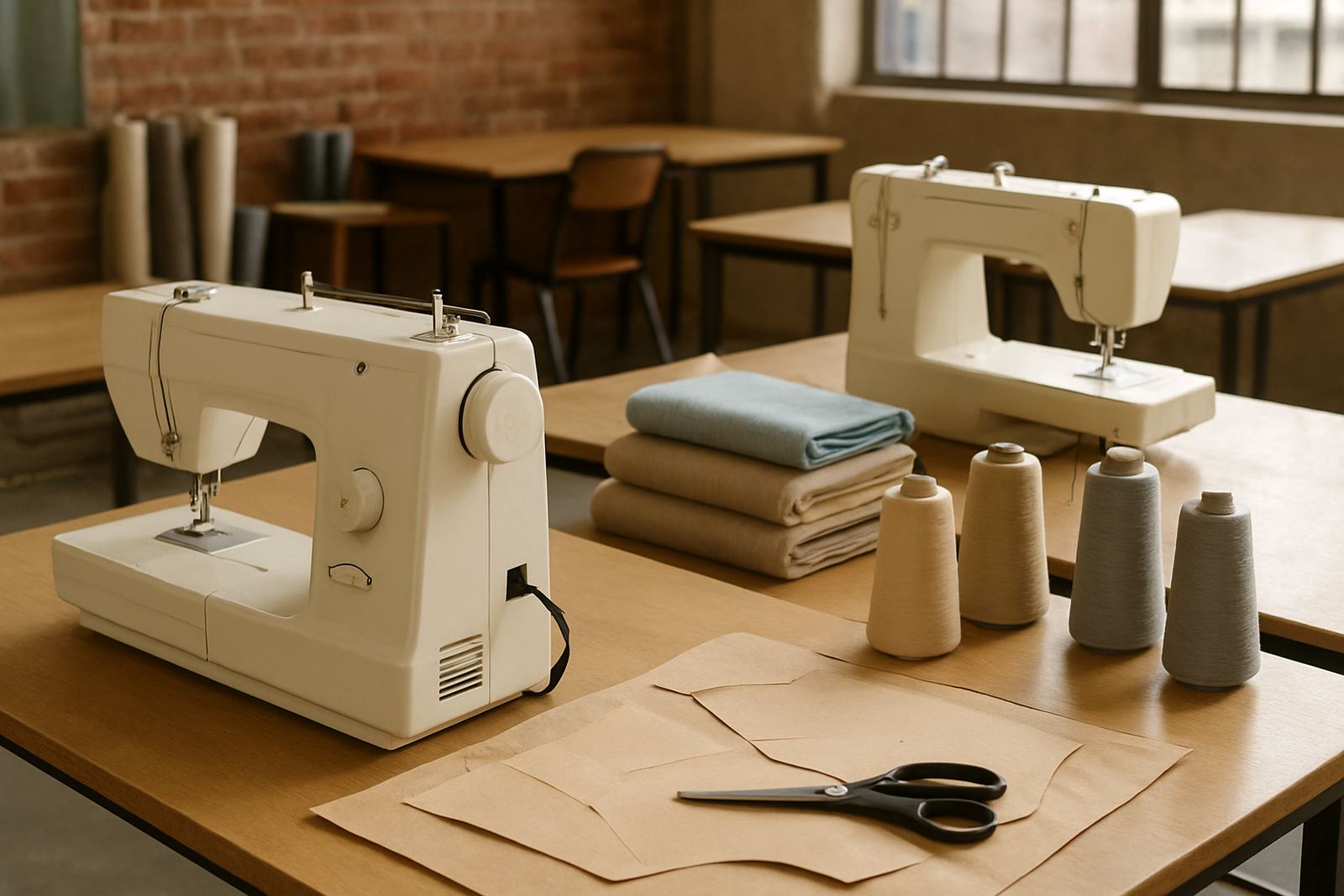
Most learners do best when they have a clear starter kit rather than a loose pile of shared items. A basic textile kit should include a sewing machine, scissors for fabric, snips, pins, tape measure, seam ripper, needles, thread in mixed colours, chalk or fabric markers and a simple pressing tool. For soft-making, it is also useful to include fusible interfacing, filling, lining cloth and a few pre-cut sample pieces for practice. The point is to reduce confusion and keep each learner moving at the same pace.
For venues that host recurring classes, consumables planning is important. Thread runs out faster than most people expect, and needles need replacing after heavy use. Pattern paper, elastic, zip fasteners and stabilisers should be counted before each session. If your group is making products for sale or display, it helps to set aside a buffer for test seams and mistakes. That keeps the class moving and avoids delays when one learner needs a replacement part. It sounds simple, but it saves time every week.
- Starter kit contents can be scaled for one learner or a full class
- Consumables should be re-ordered before stock gets low
- Pre-cut sample packs are useful for fast training starts
- Shared kits need clear labelling and a proper return system
Training flow, servicing and what we check before a booking
Before a course starts, we check the layout, the machines, the storage plan and the learning flow. That includes confirming enough chairs, a clean cutting surface, a place for completed work and a safe route for cables and irons. If the session will include steaming or pressing, we also check water access and whether the venue can manage moisture without making the room uncomfortable. In some rooms the issue is not the machine, it is the heat and clutter around it.
We also look at servicing needs. Sewing machines should be tested before use, cleaned of lint and checked for needle condition, thread path and foot control response. If the venue runs regular classes, a maintenance check after each block is sensible, especially where dust builds up or power supply is irregular. When ordering a training package, it helps to confirm fabric type, learner count, available floor space, whether you need left- or right-handed cutting support, and whether the course will be used for school work, small business training or community events.
- Check machine count, table space and learner numbers before booking
- Confirm if the venue has reliable power for irons and machines
- Ask about cleaning, servicing and replacement parts between sessions
- Prepare for fabric storage in dry conditions with labelled containers
Where Textile Crafting Basics fits across South Africa
This course suits a wide mix of spaces, from Braamfontein maker rooms to school labs in Midrand and community centres in Soweto. It is also a solid fit for training venues in Sandton, Pretoria East and inner-city Johannesburg where small groups need structured hands-on learning. In coastal cities it works well for soft-goods testing, retail sampling and classroom use where fabric handling must account for humidity and storage conditions.
Because the course is practical, it can sit alongside space planning, member onboarding, event maker stations and school lab refresh work. That makes it useful for new maker spaces that want one clear textile module in their programme, as well as established teams that need a refresher for facilitators. Whether the aim is a first tote bag, a simple prototype or a clean sewing workflow, the setup should leave learners with skills they can actually use the same week.
If you are comparing options, check the room size, the number of machines, the support needed for your venue and the consumables you want included. A clear order keeps the class focused and cuts down on last-minute gaps.
Key facts
| Course type | Introductory sewing and soft-making training for practical use |
|---|---|
| Recommended group size | 6 to 12 learners per session |
| Power requirement | Standard 220V supply for machines and pressing tools |
| Typical venue size | 20 m² to 40 m² for compact training rooms |
| Suitable locations | Braamfontein, Sandton, Midrand, Pretoria East, Soweto, Durban, Cape Town, Gqeberha |
| Common outputs | Pouches, tote bags, aprons, organisers and simple prototypes |