

Jewellery Creators
Home / Paths / Jewellery Creators

Paths

Jewellery Creators

Small jewellery makers need a setup that handles fine detail, safe finishing and tidy storage without wasting space. SA Makers helps creators plan a practical workshop path for small runs, repairs and boutique product making across Johannesburg and partner venues nationwide.

What jewellery creators usually need on day one

Most jewellery creators start with a small bench area, dependable hand tools and a way to keep materials secure. The work is often light on floor space but heavy on organisation, because tiny parts disappear quickly and mixed jobs can cause confusion. In Braamfontein, Sandton or Pretoria East, the best setup is usually one that fits 1 to 3 people, with clear separation between forming, finishing and packing.

A typical starting point covers measuring, cutting, filing, bending, polishing and basic assembly. If you work with metal, beads, wire, leather or mixed media, the plan should support both delicate work and repeatable output. Good lighting matters, especially for stone setting, solder checks and clasp alignment. In coastal areas like Durban and Gqeberha, humidity control is worth including from the start so silver, brass and findings do not tarnish as fast.

  • Bench space with a stable chair and bright task lighting
  • Tool storage for pliers, cutters, files and measuring tools
  • Small parts trays, labels and lockable storage
  • Ventilation for polishing and any heat work
  • Power points that can handle backup during load-shedding

Equipment sets that suit boutique production

A boutique jewellery setup does not need a factory floor, but it does need the right mix of hand tools and support equipment. For many startups, the best approach is to buy in phases. First comes the core bench kit, then finishing tools, then production extras once orders become steady. This keeps capital tied to useful gear instead of unused items.

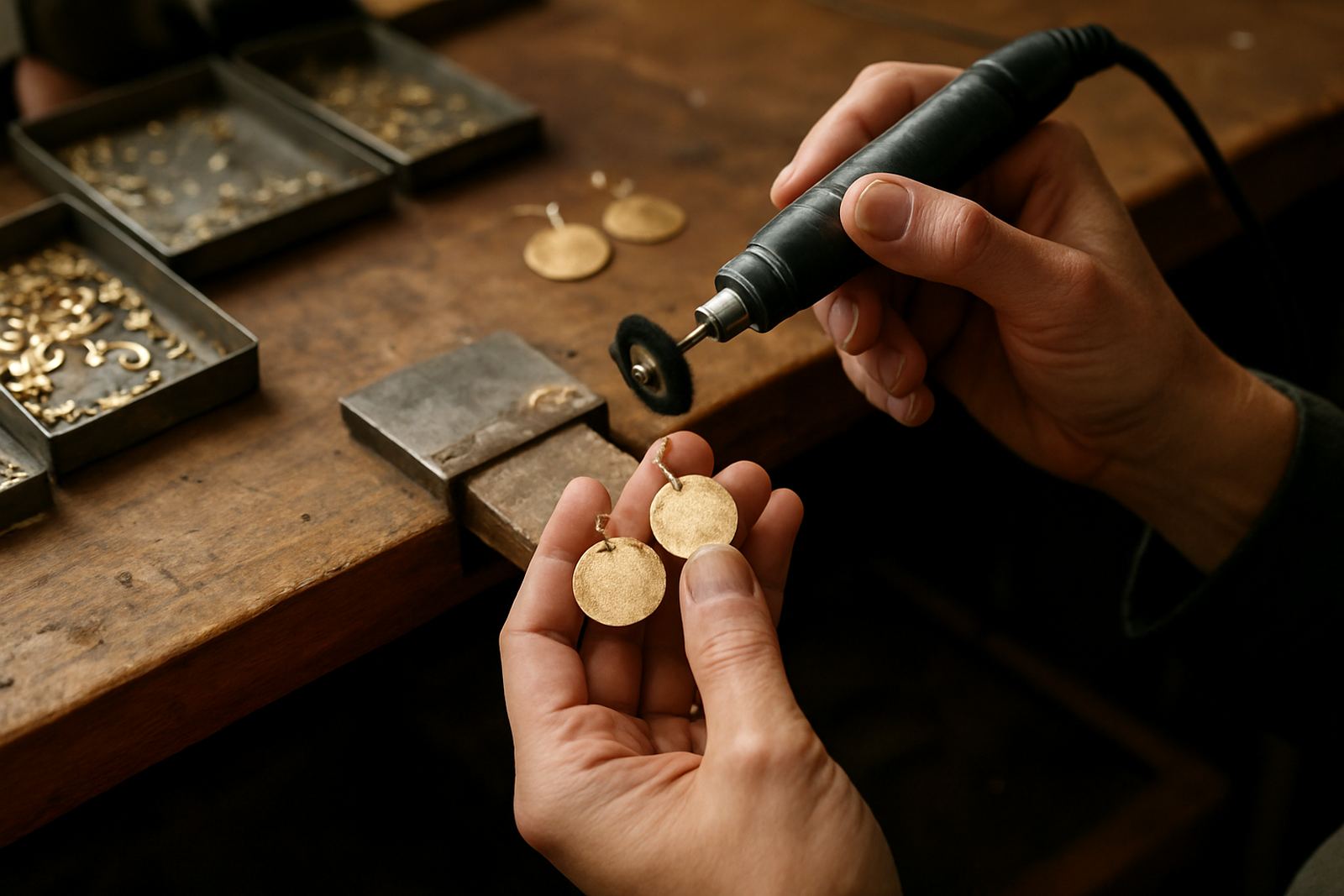
For small collections, makers usually rely on manual tools, a compact polishing station, measuring gear and basic heat or curing support depending on material. If your product line includes earrings, pendants or cuff links, you may also need jig aids and repeatable templates so every piece matches. For resin, wire or bead work, tidy curing racks and dust control are important. If your items are precious or semi precious, secure storage and controlled access should be part of the plan from the start.

  • Precision pliers, cutters, tweezers and files
  • Magnification support and inspection lighting
  • Polishing motor or compact finishing station
  • Heat safe bench mats and fire aware storage
  • Drawers, containers and packaging prep area

Layout planning for small spaces and shared venues

Many jewellery businesses begin in shared rooms, studios or partner makerspaces, so the layout has to work in a limited footprint. The safest approach is to split the room into clean zones: making, finishing, packaging and storage. That way metal dust, adhesive work and finished stock do not mix. If your team is using a shared venue in Midrand, Soweto or Cape Town, clear zoning also helps with booking, supervision and equipment control.

Tool Zone Layouts and Space Planning from SA Makers can help you set up a small room or a shared training venue with less waste. We look at bench widths, walk paths, fire safety and access to power points. For jewellery work, narrow bench runs of about 1.2 to 1.5 metres per person are often enough, with a separate lockable cabinet for stock and customer orders. If you host classes or open studio sessions, the layout must also allow safe movement for learners who are new to tools.

  • Keep polishing and filing away from packaging stock
  • Use labelled trays for each customer order or collection
  • Allow one clear exit path, even when the room is full
  • Place a first aid kit and fire equipment where staff can reach it fast

Training support that cuts common mistakes

Jewellery businesses lose time when beginners are not taught the practical basics early. Common mistakes include overbuying tools, underestimating finishing time and skipping safety steps. Another issue is poor handling of consumables, which leads to broken burs, blunt files and wasted abrasive discs. In a training room, the small things matter because one sloppy habit can affect every piece in a batch.

Our training support is aimed at makers who want repeatable results, not just hobby work. That includes member onboarding for shared venues, facilitator support for classes and school lab refreshes where learners need structured station use. A good training setup also needs clear signage, waste separation and simple maintenance rules. When teams understand the process, they make fewer mistakes and spend less on replacements. It also helps when someone is assigned to check stock levels before a workshop starts.

  • Teach order flow from raw materials to finished piece
  • Show safe handling for heat, polishers and sharp tools
  • Use checklists for stock, cleaning and end of day storage
  • Keep one person responsible for consumables planning

Starter kit budgets in Rand

Starter budgets depend on whether you are setting up for beadwork, wire work, metal work or mixed small products. A lean starter kit for a solo maker can begin around R8 000 to R15 000 if you already have a suitable table and basic storage. A more complete setup for boutique production often lands between R25 000 and R60 000, especially when polishing, magnification and secure storage are included. If you are fitting out a shared teaching space or small studio, the budget can move higher once you add benches, signage and power backup.

The best way to spend is to prioritise daily use first. Buy the tools that shape, measure and finish your core products, then add extras as orders grow. It also helps to budget for replacement parts, consumables and maintenance checks. Load-shedding can interrupt finishing work, so many makers keep a small backup power plan for lighting and selected equipment. In older buildings, especially around central Johannesburg, check plug points and ventilation before you commit to a full setup.

Typical budget lines may include:

  • Core hand tools and measuring gear
  • Finishing equipment and replacements
  • Storage, labels and packing materials
  • Safety signage and basic compliance items
  • Consumables for the first 4 to 8 weeks

How SA Makers supports jewellery creators nationwide

SA Makers works with creators who need a practical route from idea to finished product. That can mean finding a makerspace in Braamfontein or Sandton, setting up a school lab refresh in Pretoria East, or planning a startup kit for a small team in Durban or Cape Town. Our makerspace network helps you locate suitable venues, while our workshop support team can assist with maintenance checks, storage solutions and event maker stations when you need temporary production capacity.

Naledi Dube leads the business, with support from Naledi Khumalo on training, Johan van Zyl on workshop operations, Ayanda Ndlovu on community partnerships, Megan Petersen on starter kits, Thabo Molefe on technical support and Reuben Naidoo on the makerspace network. If your jewellery business is growing, we can help you map the next step without overbuying gear. The goal is simple: a clean layout, the right tools and a space that can handle real work, not just display pieces.

When to review your setup before you scale

Once you are getting repeat orders, it is time to review the room rather than just buying more stock. If tools are shared across too many people, if finished items are mixing with raw materials, or if learners are waiting for access to one machine all day, the layout needs work. A maker audit can show what to keep, what to move and what to remove.

For many jewellery creators, the next stage is not a bigger room straight away. It is better storage, clearer benches and a workflow that supports production without clutter. That is where space planning and consumables planning pay off. A tidy bench saves time, and time is what keeps a small jewellery operation profitable.

Makers on AM.CO.ZA

Verified Google reviews of AM.CO.ZA, our supply partner.

Questions we get asked

What does a starter jewellery setup usually include?

A starter setup usually includes a stable bench, fine hand tools, storage trays, inspection lighting, finishing support and a safe place for stock and consumables.

How much should a small jewellery maker budget?

Many solo makers start around R8 000 to R15 000. A more complete boutique setup often sits between R25 000 and R60 000 depending on tools, storage and finishing equipment.

Can SA Makers help with shared studios and training spaces?

Yes. We support space planning, tool zone layouts, member onboarding, facilitator support, safety signage and makerspace matching in Johannesburg and partner venues nationwide.

Planning something? Send the team a message.

Contact form