What Market Readiness Covers for Sellers
Market Readiness is a practical setup for makers who need their products, prices and presentation in order before they trade. It suits first-time stall holders, small production teams, school groups and growing businesses that sell at weekend markets, trade shows, church fairs, township events and online. The aim is simple: make it easier for customers to understand what you sell, what it costs and how to buy it.
In Braamfontein and at partner venues in Sandton, Midrand, Pretoria East, Soweto, Durban, Cape Town and Gqeberha, we look at how your goods will be carried, displayed, powered and restocked. That includes packing strength, label clarity, table layout and whether your items can handle warm weather, dust, sea air or long transport from one province to another.
Package Sizes and Setup Options
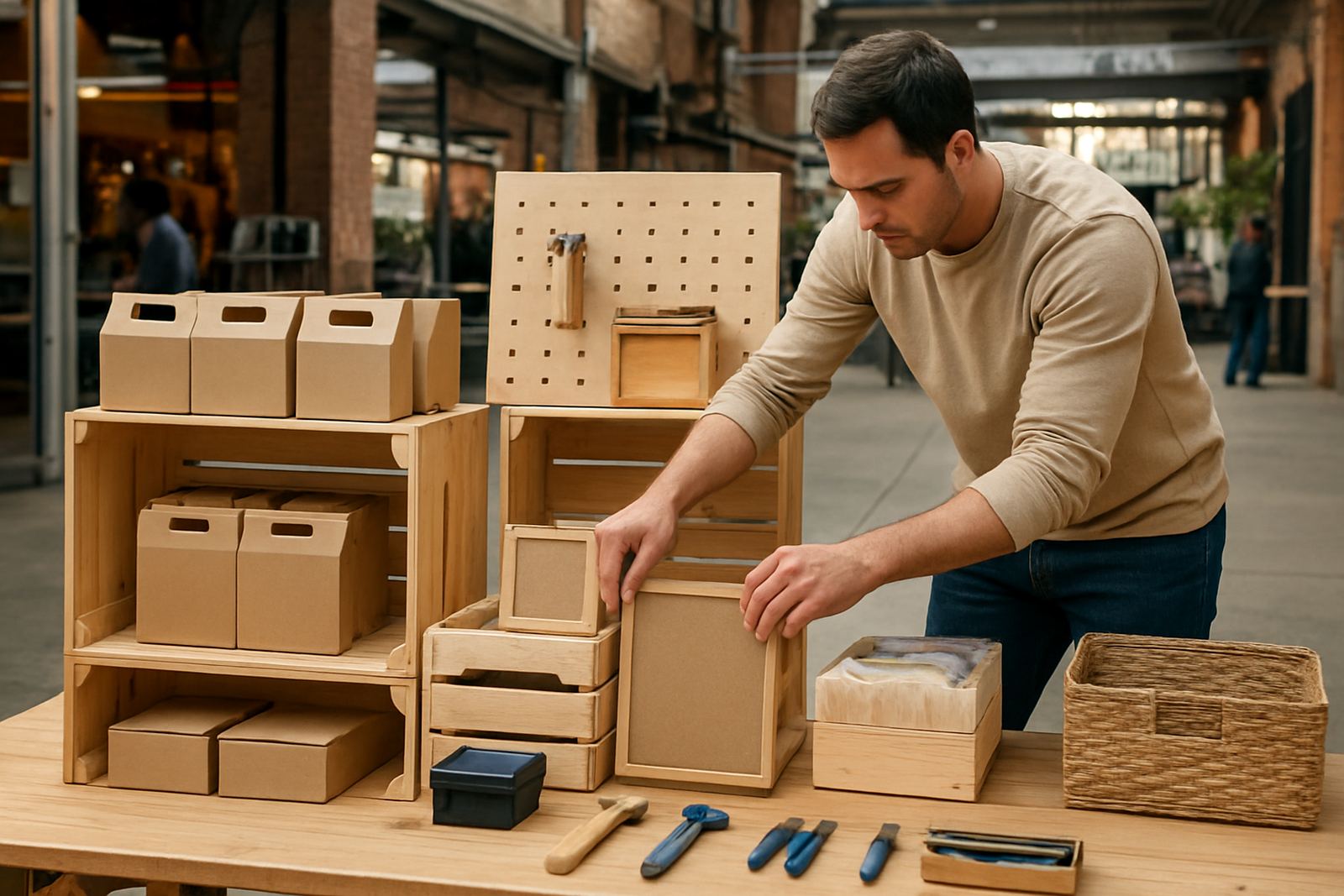
You can order Market Readiness as a light review for a small range of products or as a fuller setup for a mixed stall. Typical options suit a single table, a 3 m by 3 m gazebo stall, a countertop display, or a compact online packing station. If you sell food, craft goods, printed items or kit-based products, we match the setup to the way customers will actually buy from you.
- Starter review for up to 5 products, with pricing checks and pack list review
- Standard stall plan for 6 to 15 products, including display zoning and signage layout
- Growth setup for 16 to 30 products, with stock flow, storage and batch labelling
- Online selling pack for courier-safe cartons, inserts and return handling notes
For mixed ranges, we can separate slow movers from fast sellers so your front table stays clear. That helps when you have limited time to serve customers and only one or two helpers on the day.
Display Space, Power and Stall Conditions
Many stalls in South Africa do not give you much room or power, so the setup has to work in real conditions. We plan for folding tables, 1.8 m to 2.4 m display runs, stackable storage crates and a back-of-table working space of at least 600 mm where possible. If your goods need power for lights, a ticket printer or a small point-of-sale unit, we check the load first and keep the set-up within the venue rules.
For venues with limited electricity or load-shedding, we recommend low-draw lighting, battery banks and simple backup packing that still works when the power cuts. For coastal areas like Durban and Gqeberha, we also consider moisture, rust and packaging that can hold up in humid conditions. If your products include candles, soaps, dry foods, fabric goods or printed packaging, storage choice matters just as much as the display.
- Table space: 1.2 m, 1.8 m or 2.4 m layouts
- Power need: none, low power or mixed low-power setup
- Storage: crates, tubs, hanging bins or shelf units
- Transport: hand-carry, car boot or small bakkie load
Pricing, Labels and Buying Signals
Customers often decide in seconds, so pricing and labels need to be easy to read from a distance. We help you set clear price points, bundle offers and unit counts, whether you sell by item, set, metre, weight or size. If your range has several variants, we make sure the customer can see the difference without asking five questions at the table.
We also check the practical side of pricing. That includes your margin, small-change handling, card or transfer payment signs, and how to mark sold items without causing confusion. If you sell online as well, the same price structure should work on your product sheet and in your parcel slip so there is no mismatch at the handover.
- Price cards sized for table use and online photos
- Bundle and bulk-buy signs for larger orders
- Simple labels for variants, flavours, colours or sizes
- Payment signage for cash, EFT and card terminal use
Packing, Care and Servicing Between Events
Good market prep does not stop at the first sale. Your stock should travel in a way that protects the finish, keeps counts correct and makes restocking quick. We advise on inner packs, outer cartons, corner protection, moisture barriers and simple check sheets for returns, damaged items or short packs. If your goods are fragile, we plan the unpacking order so the best pieces are not crushed under heavier stock.
For items that need regular care, such as tools, demo kits or refill packs, we set a service rhythm for cleaning, inspection and top-up stock. That can include weekly wipe-downs, monthly stock counts and a pre-event check for loose fittings, torn labels or weak seals. A stall that looks neat on setup day but breaks down on day two will lose sales fast, so maintenance needs to be built in from the start.
What to Check Before You Place the Order
Before we prepare your Market Readiness plan, it helps to know exactly what you are selling and where you plan to sell it. We ask for product dimensions, pack counts, expected turnover, table size, power access and whether you need a demo area or just a display-only setup. If you are trading in a place with strict safety rules, we also check fire access, walkway width and any restrictions on gas, open flames or hot equipment.
Please have these details ready if you want the best result:
- Product list with sizes, pack quantities and any fragile items
- Stall type, venue name and whether it is indoor or outdoor
- Power access, gas use or no-power requirement
- Brand colours, price points and packaging already in use
- Expected sales volume for a normal day and a busy day
- Any storage limits, transport limits or setup time limits
If you are starting from scratch, we can still work with a rough product list and a few photos. From there we shape a plan that is practical for South African market conditions, not just neat on paper.
Key facts
| Use case | Stalls, pop-ups, school markets, online order packing and small retail counters |
|---|---|
| Typical setup size | 1.2 m to 2.4 m display runs, or a 3 m by 3 m market stall |
| Power need | None to low power, depending on lighting, printer or payment equipment |
| Gas need | Not required for standard setups; only for approved food or demo use |
| Environmental fit | Suitable for indoor halls, outdoor markets and coastal humidity with correct packaging |
| Order inputs | Product list, dimensions, pricing, venue details, stock volumes and storage limits |