What the Machine Safety session covers
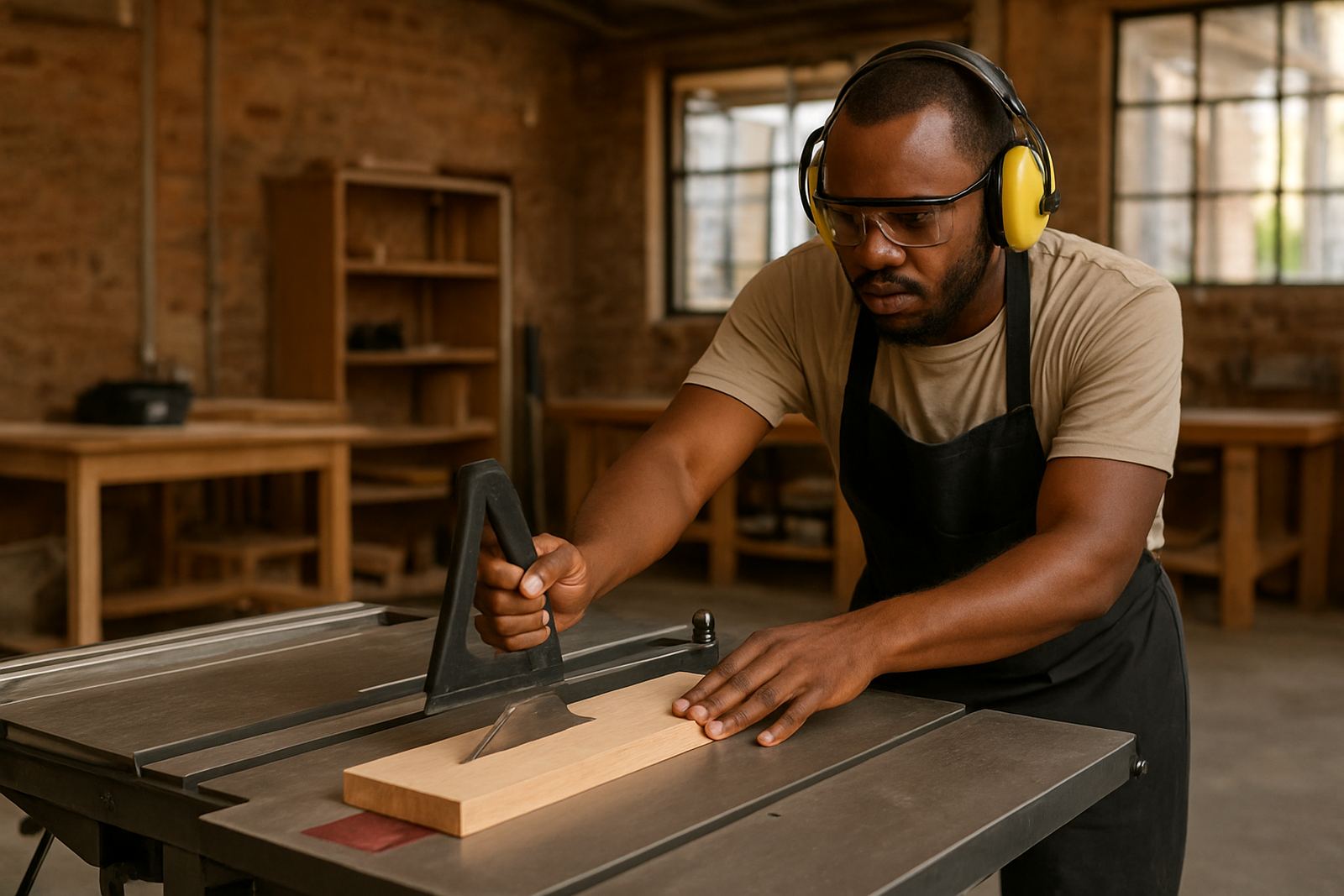
This session is built for spaces where people use bench saws, band saws, sanders, drill presses and similar workshop machines. It focuses on the habits and controls that reduce injury, protect equipment and keep the work area in order. The aim is simple: people should know what to do before, during and after machine use, not guess their way through it.
It suits new maker groups, school labs, shared workshops and community spaces that need a clear safety baseline. We cover machine zones, guarding, clear walkways, correct PPE, signposting and what to brief members on before they touch a machine. In busy Johannesburg spaces, that often means dealing with shared power points, noise, dust and after-hours access too.
Sizes and session formats
The machine safety package can be matched to a single room or a full workshop network. For smaller teams, we can focus on one machine bank and the surrounding work zone. For larger makerspaces, we can split the session into sections for cutting, sanding, drilling and general machine behaviour. That keeps the training practical and easy to apply.
Typical formats include a 2 hour induction, a half day supervisor session, or a full day workshop audit with signage and layout notes. If your venue runs classes in Braamfontein, Sandton, Midrand or Pretoria East, we can adapt the session to your daily flow and the number of members using the floor at once. The content also works well for school labs that need a refresh before term starts.
- 2 hour introductory session for new members
- Half day team briefing with machine walk-through
- Full day setup review for new or upgraded spaces
- On-site support for multi room or multi shift operations
Where it suits best
This product suits places where machine use is shared, supervised or partly self-service. In a makerspace, it helps keep traffic moving and reduces confusion around who may use what. In schools, it supports teachers and lab assistants who need clear rules for learners. In startup spaces, it helps protect new equipment from misuse and keeps the area ready for daily work.
It is also useful in coastal towns like Durban and Gqeberha where humidity can affect timber, metal surfaces and stored abrasives. In those conditions, your safety plan should include dry storage, rust checks and regular cleaning of dust from motors and guards. Load-shedding planning matters too, because a sudden stop can leave a blade, disc or cutter in an unsafe state if the shut-down routine is not clear.
- Makerspaces and fabrication rooms
- School technology labs
- Community workshops and NGO training rooms
- Small production spaces with shared machines
Installation, power and room setup
Machine safety is not only about behaviour, it also depends on how the room is set up. Machines need enough clearance for feed paths, material handling and safe exit movement. Switches should be easy to reach and clearly marked. Emergency stop points need to be obvious, not hidden behind stock. Cables should not cross main walkways, and where possible machines should sit away from doors and wet zones.
For power, most workshop machines use standard single-phase electrical supply, while larger units may need dedicated circuits. We check whether the site has enough outlets, whether extension leads are being overused, and whether the distribution board can handle the load. If your venue relies on backup power during outages, the start-up sequence should be tested so that machines do not restart unexpectedly when supply returns. Gas is not normally needed for this product, but if your workshop includes cutting or heating tools with gas cylinders, those must be stored and marked separately from the machine area.
Care, servicing and daily checks
A safety session only works if the checks become part of the daily routine. Blades, discs and sanding belts should be inspected before use. Guards must be fitted properly and adjusted only as needed for the job. Dust extraction or cleaning should happen often, because built-up dust can block vents and make the floor slippery. Loose fixings, damaged plugs and worn cords need action before the machine goes back into service.
We also help teams set a simple servicing rhythm. That can mean weekly visual checks, monthly fastening checks and a scheduled deeper inspection every few months depending on use. In shared spaces, record keeping is important so different facilitators know what was checked and when. A basic logbook, even a paper one, helps track repeat faults and shows which machine needs attention first.
- Pre-use visual checks
- Cleaning of dust and offcuts after each session
- Monthly inspection of guards, switches and leads
- Service log for repairs and replacements
What to check before ordering
Before you order, it helps to know the machine mix, the room size and who will use the space. A junior learner group needs a different setup from a trained adult maker team. If you have mixed users, ask for a layout and safety plan that separates beginner stations from advanced work. Also check the number of machines in use at the same time, because congestion is often where accidents start.
Have these details ready when placing an order: floor dimensions, ceiling height, power availability, whether the room has dust extraction, and whether the area is in a school, studio or commercial setting. If you already have machines, list the types and the main risks you see. That lets us match the session to your actual floor, not a generic idea of one.
- Room dimensions and machine count
- User level: beginner, mixed or trained team
- Power supply and backup arrangements
- Need for signage, induction and layout changes
Key facts
| Use case | Workshop safety training for saws, sanders, drill presses and similar machines |
|---|---|
| Session formats | 2 hour induction, half day supervisor session, full day setup review |
| Typical areas | Braamfontein, Sandton, Midrand, Pretoria East, Soweto, Durban, Cape Town, Gqeberha |
| Power needs | Standard single-phase supply in most cases, with dedicated circuits for larger machines |
| Room requirements | Clear machine zones, marked walkways, accessible emergency stops and dry storage |
| Maintenance focus | Blade checks, guard checks, dust cleaning, cord inspection and service logging |