From First Batch To Market-Ready Stall
Most makers start with a small run of products, a table and a lot of hope. At that stage the real challenge is not only making the stock, but presenting it in a way that looks consistent, prices clearly and survives a full day of handling, dust, sun and wind. SA Makers works with Johannesburg sellers, Braamfontein creatives and partner makerspaces nationwide to plan a stall that is ready for actual trading, not just for photos.
For a market stall brand, the basics usually include printed price cards, a table covering, product labels, sample packs, cash handling, stock tubs and a simple display system. If the stall travels between Rosebank, Fourways, Soweto or the Durban beachfront, the kit also needs to pack down fast and fit in a bakkie boot or hatchback. Good setup planning saves time at load-in, helps with safety rules at venues and keeps the brand looking the same from one weekend to the next.
We also look at how the stall will be used. A candle maker needs heat-safe storage and scent control. A food adjunct seller may need food-safe packaging and handwash access. A printmaker might need flat display boards and protection from humidity. The goal is a setup that suits the product range, the market foot traffic and the budget, without overbuying items that will stay in storage.
Typical Equipment For A Consistent Stall
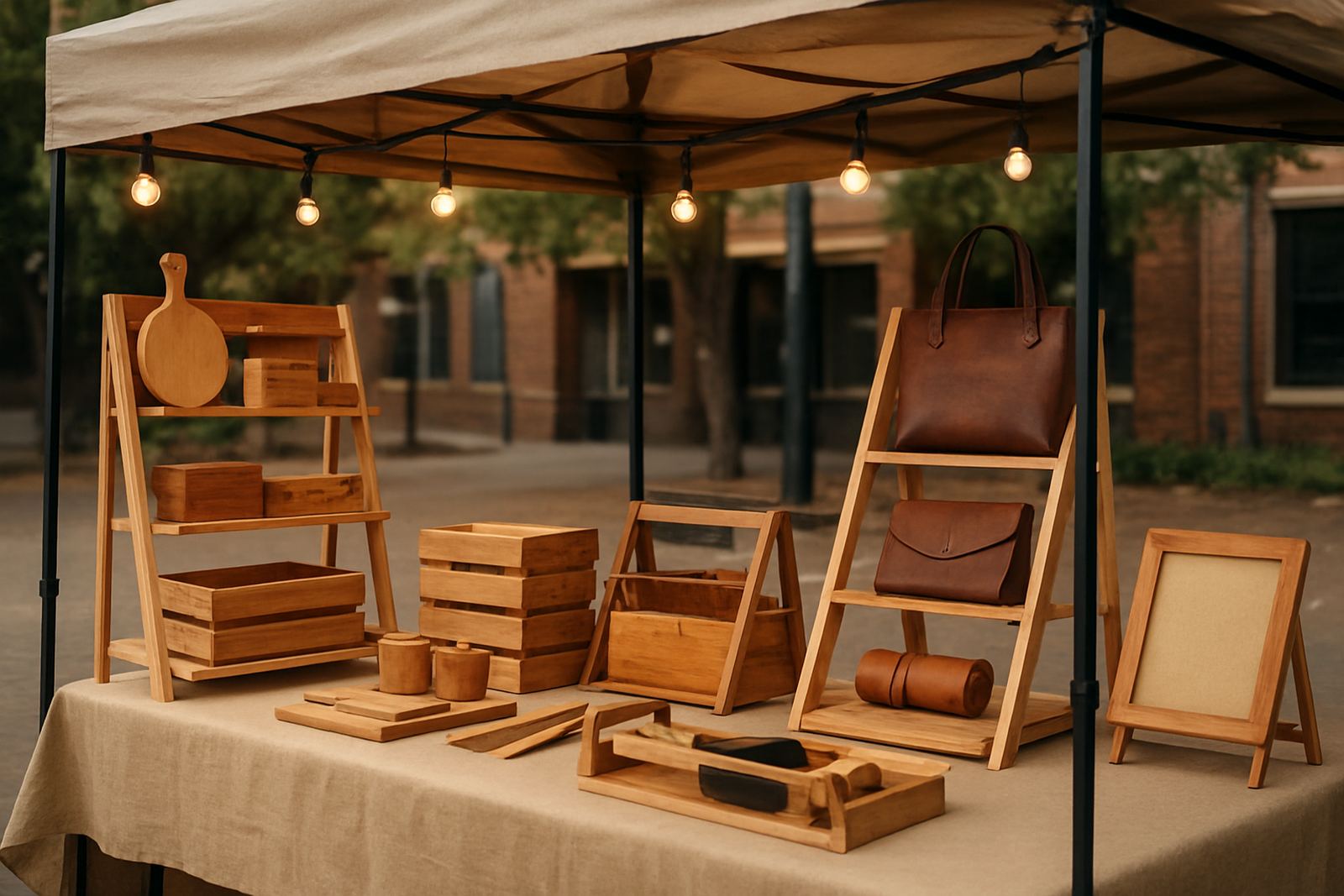
A strong market stall usually starts with a small, reliable equipment set. For most new sellers, that means display boards, foldable tables, lightweight shelves, storage crates, signage, lighting and a payment kit. In Johannesburg and Pretoria East, where many venues are indoors, you may need less weather protection. In coastal areas like Durban and Gqeberha, moisture and wind matter more, so closed tubs, weighted stands and laminated signage are worth the extra spend.
- Foldable table or two, with a fitted cloth or wrap to hide stock underneath
- Stackable crates or lidded bins for backup stock and packaging
- Tiered display stands for small goods like soaps, prints, stationery or accessories
- Clear price cards and product labels in large readable type
- Carry bags, tissue, wrapping paper and branded stickers
- LED lighting or a battery-backed light for dim venues and load-shedding
- Cash box, card payment device holder and small change tray
- Safety items such as tape, cable covers and a fire extinguisher where required
We often recommend separate tubs for front stock and reserve stock. That keeps the display neat and stops sellers from unpacking everything onto the table at once. If your products are fragile, the kit should include foam inserts, dividers or cardboard spacers. For makers who trade at school fêtes, church bazaars or weekend craft markets, the same kit should also be simple enough for a helper or family member to set up without confusion.
Layout Planning That Helps You Sell Faster
Good layout planning makes the stall easier to browse. Customers should see the best products first, then the pricing, then the extras. A cluttered table slows people down and can make good work look cheap. We usually plan stalls in zones: eye level for hero products, mid level for best sellers, and lower or side zones for reserve stock, information and add-ons.
In Braamfontein and Sandton markets, where shoppers move quickly, the stall must catch attention in the first few seconds. In slower family markets, you can build a more detailed display with samples and story cards. Either way, keep the front edge clean and open so people can step in without feeling blocked. Leave room for two people to stand without knocking into each other, especially if you expect weekend queues.
Spacing also matters for safety and trading rules. Some venues ask for a clear walkway, proper fire access and no loose cables across footpaths. In outdoor sites, table legs should be stable on uneven paving and signage should not block neighbouring stalls. A tidy layout helps with compliance, but it also makes stock counts easier at the end of the day which matters when you are tired and packing down in the dark.
Branding Choices That Look Clear In Real Markets
Market stall branding is not about filling every surface. It is about helping customers understand what you make, how much it costs and why they should choose your products. Strong branding often starts with one clear name panel, one colour set, one font style and a few repeatable labels. That can be enough for a first market season.
- Use one main colour and one support colour, not five or six competing tones
- Keep wording direct: product name, price, size and key feature
- Use a logo or name mark that reads well from 2 to 3 metres away
- Match packaging to the stall colours so the display feels joined up
- Leave space for specials or seasonal lines without reprinting everything
If you sell at more than one venue, consistency helps customers recognise you again. A shopper who sees your stall in Midrand on Saturday and Pretoria East the next month should still know it is the same maker. That recognition builds trust. We also advise sellers to test labels in daylight and under indoor lights because some colours disappear under market tents or in bright sun. Glossy surfaces can glare, while matte finishes are easier to read.
Budget Ranges For A Starter Stall Setup
Budgets vary a lot depending on product type, but most first-time market stall setups fall into clear ranges. A very lean starter setup can begin from about R3 500 to R7 500 if you already have a table, simple packaging and basic display items. A more polished setup usually sits between R8 000 and R18 000, especially if you need shelving, lighting, storage tubs and branded print items. For sellers with a bigger range or regular trading calendar, a more complete kit can reach R20 000 to R45 000.
The trick is to spend where it helps sales directly. Table coverings, signage, lighting and packaging normally come before custom display furniture. If your stock is small and high value, such as handmade jewellery or specialty gifts, good lighting and secure trays are worth more than large shelves. If your stock is bulky, then stackable storage and strong pack-down systems matter more than decorative extras.
We also look at running costs. Marketers often forget repeat spend on labels, packaging, tape, replacement lights and transport. Load-shedding can add another layer too. A battery light, power bank or backup lighting plan is a sensible line item, especially for evening events in Johannesburg and Pretoria where trading may run into power cuts. It is better to budget for these once than to improvise every market day.
Common Mistakes We See At New Markets
Many new sellers do not fail because the products are weak. They struggle because the stall is hard to shop, hard to restock or hard to pack away. One common mistake is using too much loose packaging, which creates mess and slows service. Another is putting prices in small print, so customers keep asking and the queue stalls. A third is bringing too much stock onto the table, which makes the display look crowded and less professional.
Another problem is ignoring the venue conditions. In Cape Town and Gqeberha, wind can move lightweight signs and overturn display pieces. In Durban, humidity can curl paper labels and soften cardboard. Indoor venues may have stricter safety rules than outdoor ones, so signage, cabling and fire access need attention before market day. If you trade near schools or municipal sites, always check the organiser’s rules on generators, gas, tape and open flames before you arrive.
We also see sellers underestimating pack-down. If the stall takes 45 minutes to build and 45 minutes to dismantle, that is a full hour and a half of labour before even counting sales. A better plan is a setup that one or two people can manage quickly, with every item labelled and packed in the same order each time. That saves energy and makes event days less stressful.