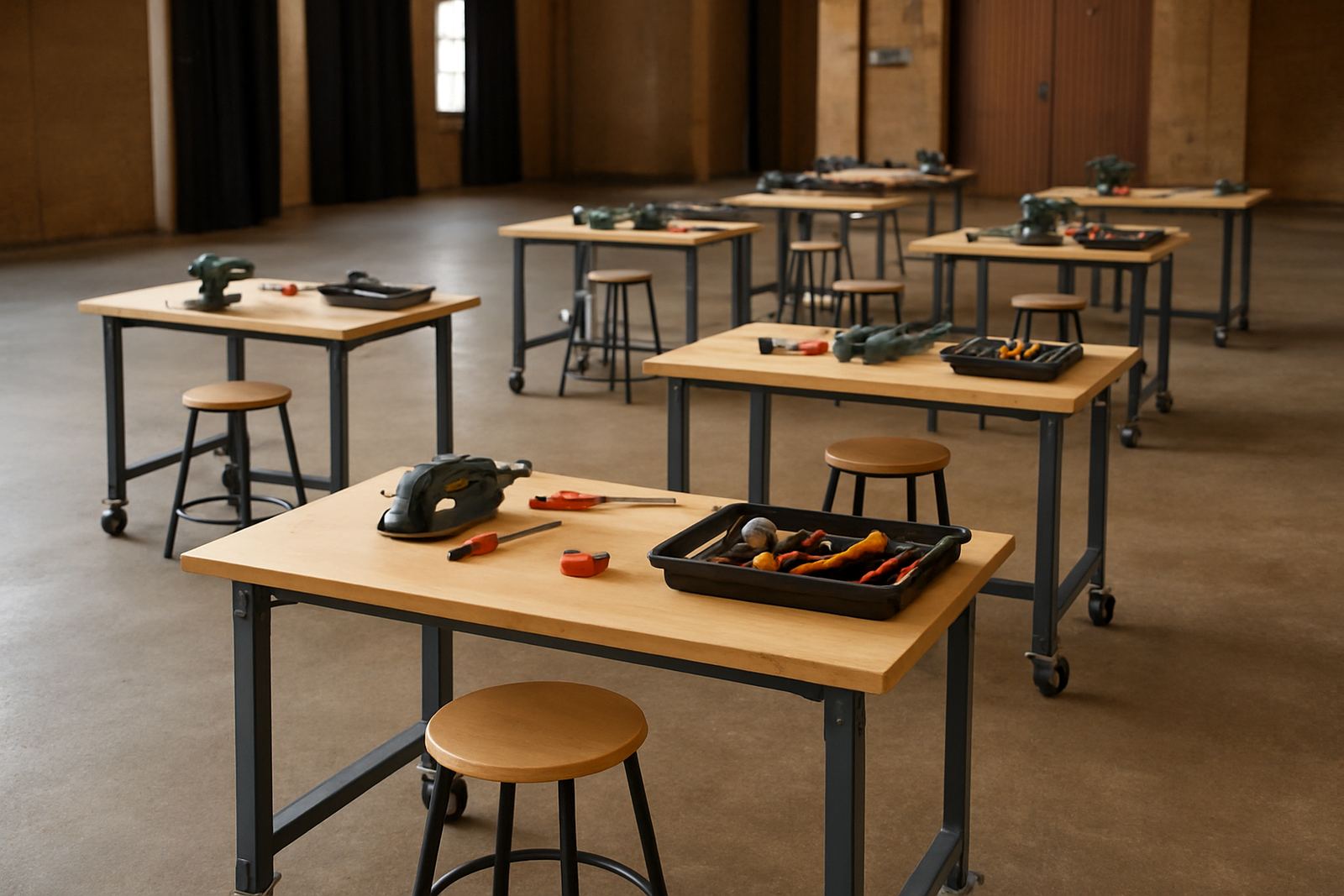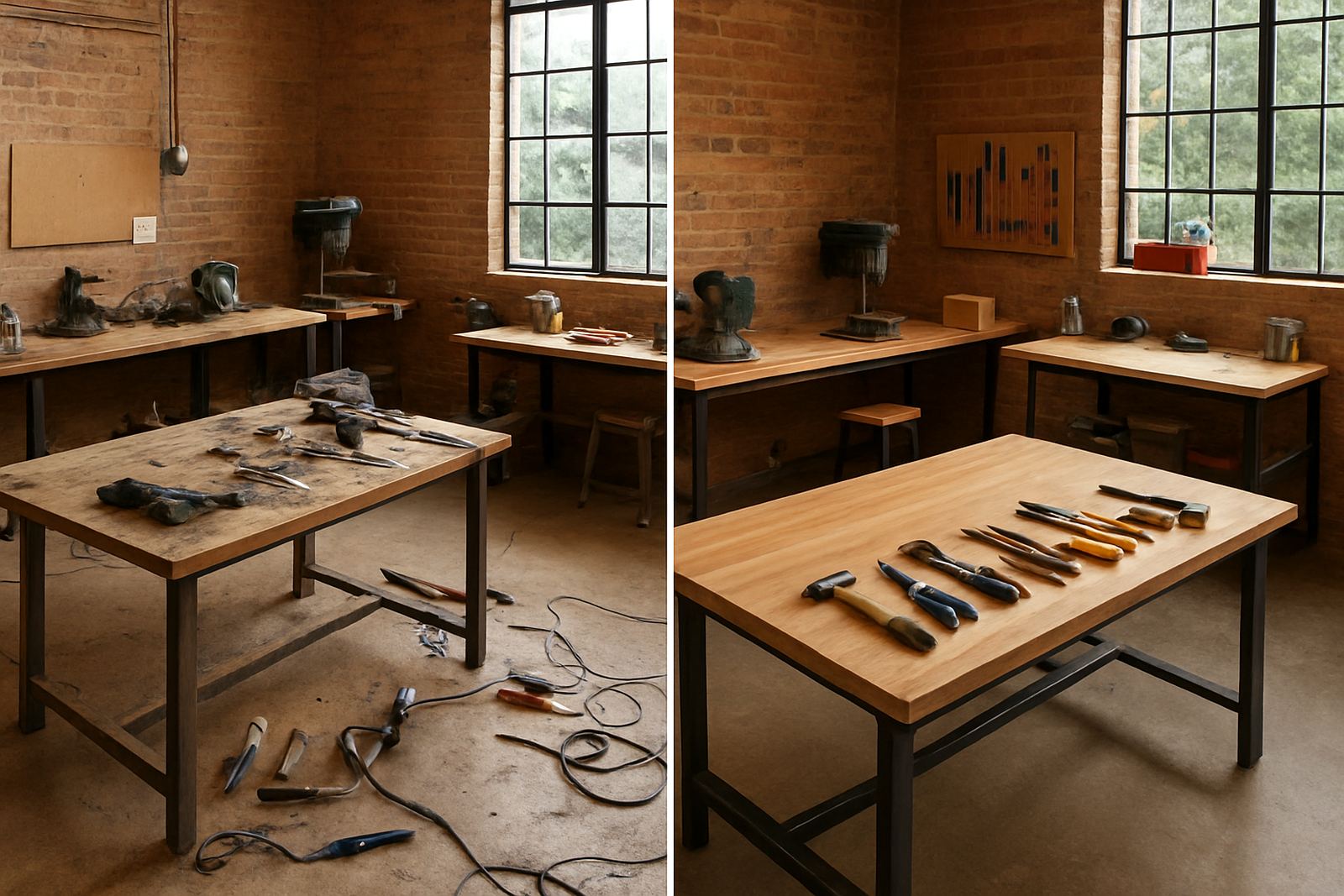
What Our Maintenance Checks Cover
Our maintenance checks are built for busy shared spaces where tools, benches and storage get used every day. We look at wear, basic upkeep and workshop readiness so you know what needs attention before a small issue turns into a downtime problem. The aim is to keep the space usable for members, trainers and visiting teams, with clear notes on what is safe, what needs cleaning, and what should be repaired or replaced soon.
We check hand tools, power tool stations, charging points, storage units, benches, safety signs, first aid points and general housekeeping. In coastal areas we also look for rust, moisture damage and corrosion, which is common in Durban and Gqeberha. In older buildings around Braamfontein or Pretoria East, we often find loose fittings, poor lighting or overloaded plugs that need attention. We are practical about it and we do not overcomplicate the report.
- Worktops, benches and vices
- Tool racks, drawers and labelled storage
- Electrical points, extension leads and charging areas
- Ventilation, dust build-up and floor condition
- Safety signage, PPE points and emergency access
How We Carry Out the Inspection
We start with a short intake so we understand the size of the workshop, the age of the equipment and the way the space is used. A school lab in Soweto will need a different checklist from a makerspace in Sandton or a shared fabrication room in Midrand. Once we know the layout, we work through the space in sections and record what is working well and what needs follow-up. If your team has a logbook or asset list, we use that too.
The inspection is done on site, with photos and notes where needed. We look at daily-use items first because those are the ones that cause the most friction for members. We then review storage, cleaning access and any maintenance habits that are slipping. If a room has been running during load-shedding, we also check whether backup lighting, charging routines and safe shutdown steps are still practical for the staff on duty.
- Initial call and space summary
- On-site walk-through by zone
- Condition notes and risk flags
- Follow-up recommendations by priority
- Optional repeat check after repairs
Turnaround Times And Reporting
For most medium-sized spaces, a maintenance check can be completed in one visit, with the report sent shortly after. Smaller training rooms or school labs may only need a few hours, while larger multi-zone workshops can take a full day. If the space is spread across several rooms, we plan the visit in a way that keeps disruption down so classes and member sessions can continue where possible. We know that in active maker spaces every hour counts.
You receive a clear summary that groups items into immediate action, short-term fixes and routine upkeep. The report uses plain language, with enough detail for your facilitator or operations team to brief a landlord, cleaner or contractor. Where useful, we include photos, simple measurements and a note on the likely cause of the issue. If there is anything urgent, such as a broken lock on a tool cage or a damaged cable near a wet area, we flag it first.
Maintenance Intervals That Make Sense
How often you need checks depends on traffic, tool type and the way the space is managed. A high-use workshop with daily bookings should be checked monthly, while a school lab or low-use training venue can often work on a quarterly cycle. Coastal humidity, dust from open doors and frequent moving of equipment all shorten the time between checks. If your space hosts public events or short courses, a pre-event check is also a good idea.
We usually recommend a simple routine that combines a quick visual review each week with a fuller maintenance check every one to three months. That rhythm helps catch worn-out handles, loose shelves and missing labels before they become a nuisance. It also helps with municipal or insurer queries because there is a record of regular care. A well kept workshop is easier to manage and cheaper to run in the long term, no matter the size.
- Weekly visual sweep for obvious wear
- Monthly check for busy shared spaces
- Quarterly check for training rooms and school labs
- Additional check after relocation or major event use
Pricing Approach For Shared Spaces
We price maintenance checks according to the size of the space, the number of zones, the amount of equipment and the level of detail needed. A single room with a modest tool set is priced differently from a multi-room makerspace with storage, electronics, woodwork and event stations. If you need a same-day turnaround or an after-hours visit, that can also affect the final amount. We keep pricing straight forward and link it to the actual time on site, not guesswork.
For planning purposes, most clients ask for a once-off assessment first, then choose a recurring interval based on the findings. That makes it easier to budget and compare the cost of upkeep against the cost of breakdowns. We can also bundle maintenance checks with storage reviews, member onboarding updates or safety signage setup if the space needs more than one service. It is usually cheaper to fix three small problems early than to pay for one full stop later on.
What You Get After The Visit
After the check, you get a practical action list that shows what needs attention, what can wait, and what should be monitored. We can also help you prioritise the work if you have a limited budget or only one maintenance day a month. For some clients, the useful outcome is a simple weekly checklist for facilitators. For others, it is a more detailed record that supports training, booking control and supplier planning.
The handover is meant to be used, not filed away. If you need a follow-up visit, we can return to verify repairs, check whether the space has settled back into normal use, and confirm that the same issues have not come back. Teams in Braamfontein, Sandton, Durban and Cape Town often use this approach when they are managing more than one room or venue. It keeps the standard steady even when staff change, and it gives new team members a clear picture of what good workshop care looks like.
- Priority action list
- Condition notes by zone
- Photo references where needed
- Suggested interval for the next check
- Optional follow-up verification visit
Key facts
| Service area | Braamfontein, Johannesburg base with partner venues in major SA cities |
|---|---|
| Typical visit length | 2 to 8 hours depending on workshop size and zones |
| Report format | Plain-language summary with priority actions and photo notes |
| Best suited to | Shared workshops, makerspaces, school labs, training rooms and event maker stations |
| Recommended interval | Monthly, quarterly or after major use depending on traffic |
| Pricing basis | Sized by floor area, number of equipment zones and report detail required |