Start with the next visible step, not the full finish line
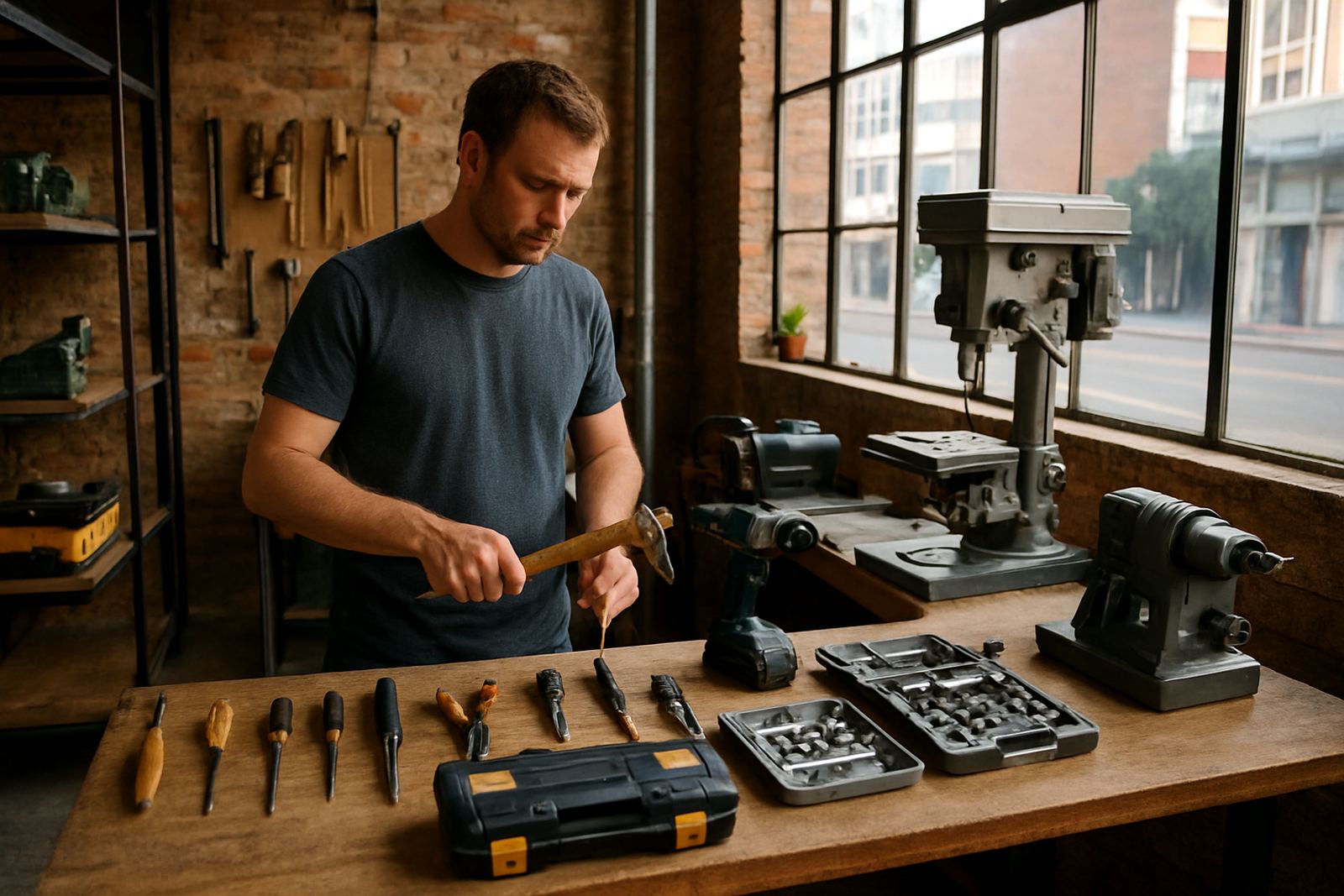
When a project has sat on the shelf for weeks, the mind often turns it into something bigger than it is. The quickest way back in is to ask one simple question: what is the next visible step I can complete in 20 to 30 minutes? That might be sorting screws by size, sanding one panel, checking measurements, or testing a single circuit with fresh batteries.
Small jobs are not a sign of low ambition. They are a practical way to reduce the friction that builds up after a break. If the project is a workbench, a school model, or a light wood frame, put the biggest unknowns aside for now and focus on one task you can finish before tea. Completion creates its own momentum.
In Braamfontein, a maker who had left a prototype speaker box untouched for nearly two months restarted by cutting only the side panels and drilling pilot holes. That was enough to turn a dead project into a live one again. The lesson is simple: a project does not need a big speech, it needs a first bolt tightened.
Make a restart list that fits a South African workday
Restarting works better when the list is short, honest, and built for local conditions. Load-shedding, transport delays, and family obligations can interrupt a plan without warning, so a restart list should be realistic rather than idealistic. Keep it to five items max and write it where you can see it.
- Find and inspect all parts before doing anything else
- Check what is missing, damaged, or out of stock
- Set one task for the next hour only
- Choose the right venue, tools, and power backup if needed
- Mark a finish point that is achievable this week
A good restart list also helps when you are working across different towns. A project begun in Soweto and finished in Sandton, or an event build heading to Durban, needs a clear handover list so nothing gets lost in transit. If the list is too long, you will avoid it. If it is short and practical, you will use it.
Use a low-pressure test before you commit to the whole build
Self-doubt often grows when the next step feels expensive or irreversible. Before you recommit, run a small test. Cut one sample piece, assemble one joint, or wire a short section and check whether it behaves as expected. This is especially useful for anyone working with timber, basic electronics, or mixed materials where errors can be costly.
Testing early gives you useful information without draining your energy. If the sample goes wrong, you have lost an hour, not the entire project. If it works, your confidence rises because the project has given you proof instead of pressure. That proof matters more than positive thinking on its own.
For many makers, the fear is not failure but a messy restart. A quick test gives you a cleaner re-entry point and keeps the rest of the build easier to manage. It also helps when parts have changed over time, because a fresh test shows whether the original plan still makes sense.
Bring the project back into a shared space
Some projects stall because they become lonely. A clean, well-run makerspace or training venue can change the pace immediately. Being around other people working on their own builds makes it easier to return to your own. You pick up practical ideas, get a second opinion, and remember that many people are building one step at a time too.
In Johannesburg, one local team brought a delayed school lab refresh back to life by moving the work out of a crowded storage room and into a shared workshop for an afternoon. Once the tools were laid out properly and the safety signs were visible, the group finished more in three hours than they had managed in three weeks. The space made the difference, not a miracle.
- Choose a space with clear work zones and enough table room
- Check power access if you need drills, chargers, or test gear
- Confirm storage for parts that cannot be left out overnight
- Ask for facilitator support if the team is stuck on a technical point
For school groups, startup teams, and community makers, a shared venue can also improve coordination. It reduces confusion about who is doing what, and it gives everyone a proper place to concentrate without household interruptions.
Fix the practical blockers first: tools, storage, and consumables
Sometimes a project feels emotional when it is really operational. The issue may be blunt blades, missing screws, no labelled bins, or materials stored in a damp corner. Before you question your ability, check the physical setup. A project that lives in a box of mixed bits will always feel harder than it should.
Good restart planning means dealing with the boring stuff first. Replace worn cutting discs. Count fasteners. Move sensitive items away from moisture, especially in coastal areas like Gqeberha or Durban where humidity can creep into cardboard, timber, and packaging. If your project is paused for more than a week, protect it properly so you do not start again with warped stock or rusty parts.
Useful fixes often look unglamorous, but they save time later. Storage tubs, simple labels, and a clean shelf can make the next restart much easier. If you are managing a team, keep consumables planned in advance so the next person does not hit a dead end at the first missing item.
Restart with people, not just motivation
Motivation fades. People stay useful. That is why a good restart is often social. Ask for a quick check-in, book a practical session, or get someone to help you sort the parts and review the plan. A fresh set of eyes can spot a wrong measurement, a missing tool, or a simpler order of work in seconds.
This matters for training too. Many aspiring makers need a structured way back in after a gap, not a lecture about discipline. A short refresher session, a facilitator nearby, and a clear start point can turn hesitation into progress. For teams, member onboarding and maintenance checks keep the pace steady so old problems do not return.
If you feel behind, do not wait until you feel fully ready. Start with the smallest useful action and let the next one follow. Creative work usually comes back through motion, not mood. Once the first piece moves, the rest becomes easier to carry.